February’s Title Pick for Adults: Great Expectations by Charles Dickens
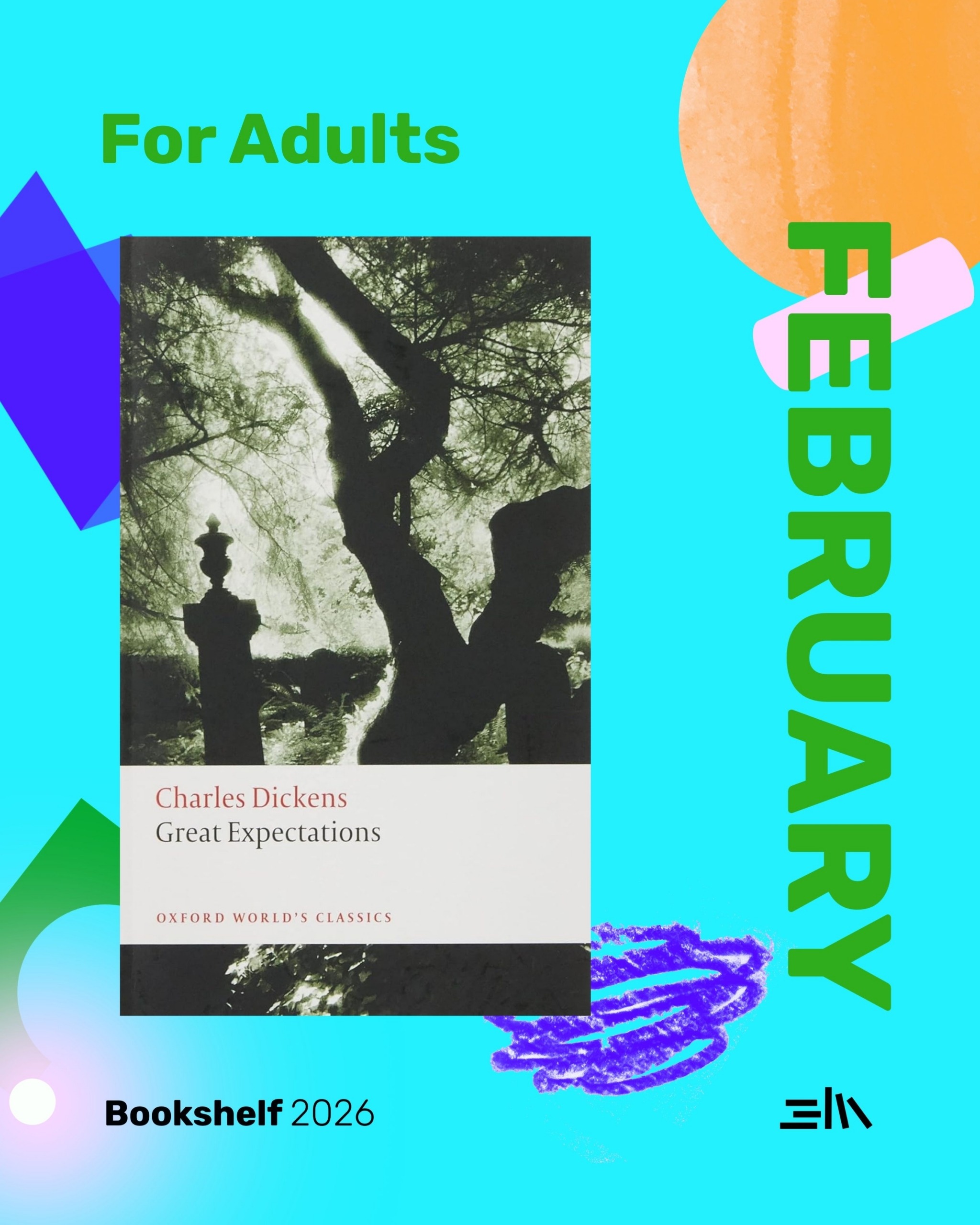
Great Expectations by Charles Dickens
The Reader’s staff and volunteers have been leading Shared Reading groups in many different locations around the country for over 20 years, and during that time, Charles Dickens’ Great Expectations has been brought to these groups because of the powerful effect it can have among these groups of readers.
An extract from Chapter 8 of Great Expectations - the famous scene when the young Pip visits the strange Miss Havisham for the first time – was included in The Reader’s anthology A Little, Aloud (published by Chatto & Windus).
‘I knocked, and was told from within to enter. I entered, therefore, and found myself in a pretty large room, well lighted with wax candles. No glimpse of daylight was to be seen in it. It was a dressing-room, as I supposed from the furniture, though much of it was of forms and uses then quite unknown to me. But prominent in it was a draped table with a gilded looking-glass, and that I made out at first sight to be a fine lady’s dressing-table.
Whether I should have made out this object so soon if there had been no fine lady sitting at it, I cannot say. In an arm-chair, with an elbow resting on the table and her head leaning on that hand, sat the strangest lady I have ever seen, or shall ever see.
She was dressed in rich materials — satins, and lace, and silks — all of white. Her shoes were white. And she had a long white veil dependent from her hair, and she had bridal flowers in her hair, but her hair was white. Some bright jewels sparkled on her neck and on her hands, and some other jewels lay sparkling on the table. Dresses, less splendid than the dress she wore, and half-packed trunks, were scattered about. She had not quite finished dressing, for she had but one shoe on — the other was on the table near her hand — her veil was but half arranged, her watch and chain were not put on, and some lace for her bosom lay with those trinkets, and with her handkerchief, and gloves, and some flowers, and a Prayer-Book all confusedly heaped about the looking-glass.’
After reading this extract, one Shared Reading group talked about Dickens’ description of Miss Havisham’s room and what it must have been like for a small boy to find himself in such an extraordinary place, with people he never could have imagined in his wildest dreams. Someone picked out the line ‘I saw that the bride within the bridal dress had withered like the dress, and like the flowers, and had no brightness left but the brightness of her sunken eyes.’ What were Miss Havisham’s reasons for going on living in such a pitiful state? The cruel treatment of Pip by Miss Havisham’s beautiful young ward, Estella, concerned people in the group, especially the way Pip is made to feel ashamed. What, they wondered, effect would this meeting and these people have on Pip, and how long would it last?
The Reader’s staff have read Charles Dickens’ Great Expectations many times with Shared Reading groups in criminal justice settings, and not merely because the novel features one of the most famous convicts in English literature. A group in a women’s prison in Ireland found parallels between Pip’s condition in the extract from Chapter 8 and their own. The account of the group’s discussion that follows is taken from an article written by the Reader Leader for Inside Time.
‘He calls the knaves, Jacks, this boy!’ said Estella with disdain, before our first game was out. ‘And what coarse hands he has! And what thick boots!’
I had never thought of being ashamed of my hands before; but I began to consider them a very indifferent pair. Her contempt for me was so strong, that it became infectious, and I caught it.’
‘The “infection” of her judgement is what we begin to talk about.
“That’s just like being in here,” offers P, and the other women agree.
“People will just see me as a criminal when I’m out of here,” says another.
We talk about how society, like Estella, makes a judgement on us. For us, this judgement becomes “infectious” – somehow we internalize it and begin to see ourselves in the same fractured light. We discuss how our views are formed, why we let some opinions and not others shape who we are. Later in the novel, the “infection” spread by Estella’s opinion of him motivates Pip to learn to read and write. We also talked in the group about how we can use negative opinions positively, just like Pip, to improve our situation.’
Throughout this year, we’ll share extracts from Great Expectations and loan sets of copies of the book so that more Shared Reading groups can be drawn into Pip’s story and use it to better understand their own, as these past groups have done.
By Frances Macmillan (Literature Engagement Lead at The Reader)
Share
Related Articles

April’s Title Pick for Children: The Very Noisy House by Sally Nicholls
‘SQUEEEAK’ goes the garden gate, ‘RING RING’, ‘KNOCK KNOCK’, ‘DING DONG’ at the door. Readers are invited to pay a…
April’s Title Pick for Adults: The Home-Maker by Dorothy Canfield Fisher
The Home-Maker is an American novel first published in 1924 and rediscovered and published in the UK by Persephone Books…

March’s Title Pick for Children: Don’t Ask the Dragon by Lemn Sissay
Reflections on Don't Ask the Dragon by Lemn Sissay by Erin Carlstrom, Shared Reading Practice Leader ‘What do you think…