Leading voices warn children’s happiness and emotional growth at risk when reading is lost, at The Reader event
Leading figures from literature, children’s services, and government gathered at Shared Reading charity The Reader’s event on Thursday 12 November to explore reading as a crucial tool for children's happiness, resilience, and imagination.
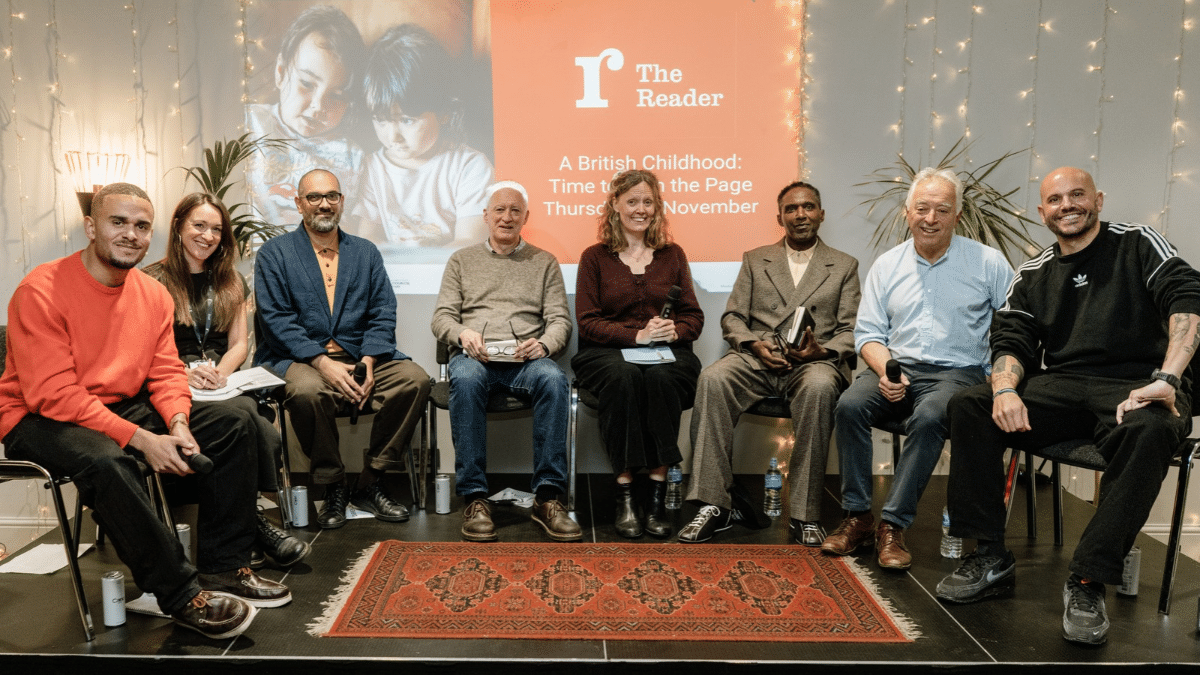
A British Childhood: Time to Turn the Page opened with a lecture by author and Reader patron Frank Cottrell-Boyce. In his address, ‘The Kids Are Not Alright’, Cottrell-Boyce examined how poverty and housing insecurity prevent children from establishing reading routines, how excessive screen time affects children, and why reading is crucial for young people navigating the world as they grow.
Then, a cross-sector panel chaired by broadcast journalist and presenter Ashley John-Baptiste considered the actions needed urgently to embed the power of reading and literature into children’s lives. The panel were:
- Frank Cottrell-Boyce, author, and patron of The Reader
- Annie Crombie, Co-CEO of BookTrust
- Lemn Sissay, poet, author, and broadcaster
- Paul Boyce, children’s services leader, social worker, and improvement specialist
- Dr Darren Chetty, teacher, lecturer, writer, and editor
- Matt Goodfellow, award-winning poet, author, and performer
- Katie Clark, Director of Literature at The Reader
What the panel said
The panel was unified in its passion for reading – and for children and young people to see themselves represented in books - but all identified key areas across education, publishing, and children’s services that, in their views, could be improved by working together.
Katie Clark of The Reader set the scene: “We're here tonight because we want to keep working together to ensure that access to that ‘constant comfort’ is available to all children from the earliest age, and right the way through their lives. Together we want to ensure every child has the opportunity to enjoy books, stories and reading from birth regardless of their family background or financial circumstances.”.
In his keynote, Frank Cottrell-Boyce remained optimistic, but a realist, when it came to what he had witnessed around the country: “We have a grim parade of hyphenated poverties, from food poverty to furniture poverty... How is a child going to dream about going to Narnia if there’s no wardrobe to walk through, and their belongings are in a bin bag in the corner of the room, ready to move?”.
Meanwhile his brother Paul Boyce, who works within children’s services, sees a lack of joined up working to promote reading in young people: “Within our communities, there are lots of individuals and organisations who are working almost in parallel with each other, trying to achieve very similar objectives – and I think they’d have more impact if they were able to collaborate, for example on Shared Reading [initiatives]”.
Lemn Sissay recognised that while reading words has increased generally, much of this is digital: “There are more people reading than ever before – but on screens. There is a bridge to reading [books], and bookshops are surviving on the high street; but keeping books and reading alive is all of our responsibility”, he said.
There was much opinion on the panel about the changing state of the publishing industry and the mental and physical load on teachers and schools today. Matt Goodfellow offered: “I think we need a conversation about state education and about the autonomy which - in my opinion - has been taken away from teachers. We also need to look at the publishing industry which continues to publish books for young people that are already readers. Will it take a risk if it doesn’t make money - or publish books from authors from all backgrounds?”.
Dr Darren Chetty, also thought that the publishing industry had changed over the years, saying, “Publishers in the 70s and 80s were kind of eccentric, and had a familiarity with readers and educators – now this isn’t the case. I also believe that audiobooks didn’t come out of educational theory but rather commercialism of the industry.”
Annie Crombie of Booktrust also saw education as having shifted in emphasis to attainment targets over promoting reading for pleasure, adding: “We have ceded much territory to phonics, to literacy – and it’s a great way to start an education, but reading is a way of exploring our identity; of connection.”
Children’s Commissioner Dame Rachel de Souza, said in support of the evening, “Children across the county have told me how much they love reading and how stories matter to them. They want books, not screens, because reading and stories shape their worlds, ignite their imagination, and transport them to new galaxies and continents.
“Reading has the ability to change children’s lives, it teaches them empathy and kindness, and it shows them that something different and more is possible. As Children’s Commissioner, I have heard from thousands of children who have told me they want greater access to libraries and books, and that’s why The Reader is so important.”
How The Reader supports children and young people
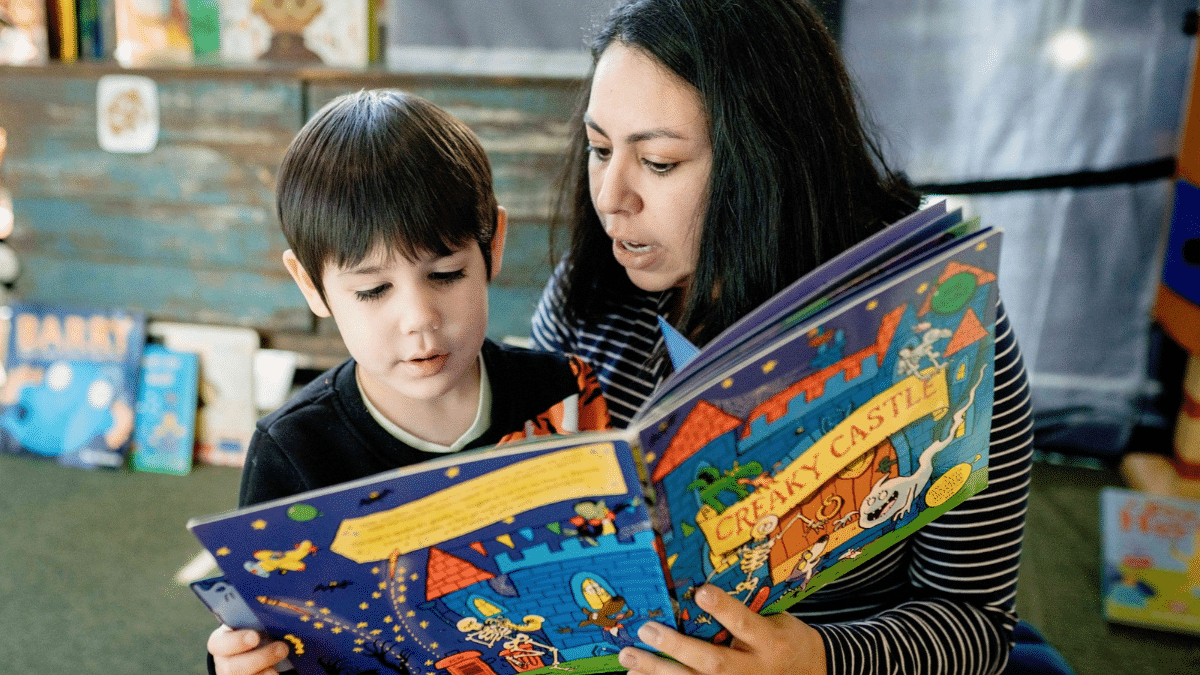
For over two decades, The Reader has supported children to discover, enjoy and share reading through dedicated programmes like Reading Heroes – which supports care experienced children and young people aged 2-15 years, pairing them with a highly trained volunteer to read aloud together. It also delivers Shared Reading in one secure children’s centre.
In addition, The Reader welcome families to its home in Liverpool's Calderstones Park, where the charity sparks a love for reading in its multi-purpose playspace, The Storybarn.
Meanwhile, working alongside its partners, The Reader delivers Shared Reading training courses to parents, carers, and Early Years professionals – reaching over 7,700 unique participants through these programmes each year. In our response survey, 100% of participants agree that it has helped their child to build a positive relationship with books and reading.
Find out more about its transformative work with young people at thereader.org.uk. The Reader’s A British Childhood: Time to Turn the Page reception was kindly sponsored by Fortnum & Mason.
Share
Related Articles
The Reader unveils inspiring winter 2027 season in Calderstones Park
Burns Night celebrations, a new Book & Wine Tasting experience, dinosaur encounters, wellbeing events and family half-term fun come to…
The Reader Cinema FAQ’s
If you were able to snap up tickets to our cinema programme, check below for any queries you might have…

The Reader reveals magical Christmas 2026 season at Calderstones Park
New Christmas concerts, festive cinema and family theatre join the seasonal celebrations, offering ways to get together at Liverpool’s Calderstones…